A stage-by-stage guide to building a security program that scales with your business, supports enterprise revenue, and holds up under investor scrutiny.
Security in SaaS companies is often misunderstood, especially in early and growth-stage startups. These businesses deliver cloud-based software and are responsible for storing, processing, and protecting customer data, particularly as they begin targeting enterprise clients where security and compliance directly impact revenue.
The challenge is rarely a lack of intent. It is a lack of clarity on how a security program should evolve with the business. Too often, security is treated as a cost center, a standalone function, or a set of tools to bolt on later. The companies that get it right take a different approach: they build security into how they operate, embedding it into product requirements, engineering processes, and day-to-day decisions.
This guide walks through what the right security investments look like at each funding stage — so you can stop playing catch-up and start building a program that scales alongside your infrastructure and development.
SaaS Security Investment by Funding Stage: Quick Reference
Funding Stage
Annual Security Investment
Key Priorities
Compliance Milestone
Seed
$20K – $40K
IAM, MFA, cloud config, advisory
Foundational hygiene
Series A
$100K – $150K
Fractional CISO, policies, monitoring, pen test
SOC 2 Type I
Series B
$300K – $600K+
First security hire, IR process, HA/DR, annual pen testing
Seed Stage: Lay the Foundation Without Overbuilding
At the Seed stage, security should be advisory-led with minimal overhead. This is not the time to hire a dedicated security team or chase compliance frameworks. Instead, companies should rely on light external guidance to make foundational decisions around identity and access management (IAM), cloud configuration, service availability, and basic access controls.
What to prioritize
Multi-factor authentication (MFA) across all systems
Password management tooling
Basic device security policies
Cloud configuration hygiene (IAM roles, no public buckets)
Advisory support to avoid foundational mistakes
Security testing is typically not required at this stage unless the product handles sensitive data. Getting foundational decisions right early prevents costly rework later.
Typical annual investment: $20K – $40K
Spend at this stage is primarily advisory support and a handful of essential tools. The goal is simple: avoid creating problems that become expensive to fix later.
Series A: Build Credibility and Close Security-Sensitive Deals
By Series A, security starts to directly impact revenue. Prospects begin asking questions, and sales cycles introduce formal security reviews. This is where a structured external support model begins to pay off, often through a fractional CISO and targeted partners.
What to prioritize
Defined security policies and data handling practices
Basic logging and monitoring
Focused penetration test and cloud configuration review
Cyber insurance (as data sensitivity and deal size grow)
SOC 2 Type I to validate control design
SOC 2 Type I is typically the starting point for compliance at this stage. It validates that controls are designed correctly, with a path toward SOC 2 Type II as the company needs to demonstrate those controls operating effectively over time. SOC 2 Type II audit costs generally range from $30K to $60K, plus several months of evidence collection.
Cyber insurance costs typically range from $10K to $20K annually and become relevant as companies begin handling more sensitive data and closing larger customers.
Typical annual investment: $100K – $150K
This covers advisory, initial tooling, and project-based implementation. Security at this stage is not about perfection — it is about being credible and responsive.
Series B: Build Internal Ownership and Operational Security
At Series B, security becomes an operational function with internal ownership and continued external support. This is the stage to hire your first dedicated security resource — typically a security engineer or analyst — while continuing to leverage fractional leadership and external partners for depth.
When should a startup hire a CISO?
Many companies default to hiring a CISO or senior security leader at Series B, but this often introduces a high cost, typically $250K or more in total compensation - without adding the hands-on execution that is actually needed when building the function from scratch. A security engineer or analyst, supported by fractional CISO leadership, typically delivers more value at this stage.
What to prioritize
SOC 2 Type II: controls must be operational, not just documented
Formal incident response process (defined and tested)
Monitoring and detection capabilities
High availability and disaster recovery (with defined RTOs and RPOs)
Annual penetration testing (infrastructure and application)
Application security integrated into development workflows
Consistent, defensible responses to security questionnaires and RFPs
Typical annual investment: $300K – $600K+
This includes personnel, tooling, compliance, and external services. At Series B, security directly supports enterprise deals, integrations, and customer trust.
Series C: Scale Security as a Core Business Capability
At Series C, security scales with the business and becomes a fully integrated capability across the organization. This is typically the right stage to bring in a dedicated CISO to align the security program with company direction and support executive decision-making.
What to prioritize
Dedicated security team with defined roles and responsibilities
MDR or MSSP for continuous monitoring and response
Mature tooling across detection, data protection, identity, and cloud security
Security embedded in product development and business operations
Ongoing security testing as part of the development lifecycle
SOC 2 Type II supported by automation to reduce overhead
Customer-facing security portals to streamline questionnaires
Acquisition and diligence readiness
Many Series C companies are preparing for acquisition or strategic investment. Underinvestment in security surfaces as risk during diligence and can impact valuation. Overinvestment without clear alignment to business needs reduces efficiency. Getting this balance right matters.
Typical annual investment: $500K – $1M+
This includes team, tooling, monitoring, compliance, and ongoing testing. At Series C, security is not a reactive function — it is a core part of the business that supports growth, withstands scrutiny, and contributes directly to enterprise value.
Building a Security Program That Grows With Your Business
Security in SaaS is not about doing everything at once. It is about making the right decisions at the right time. The companies that get this right do not treat security as a blocker or a checklist — they treat it as part of how they build, operate, and scale.
Each stage comes with different expectations, risks, and investments. Understanding that progression is what separates reactive teams from those that can move quickly and confidently. The goal is not perfection. It is a security program that grows with the business, supports revenue, and holds up under real customer and investor scrutiny.
FAQs
Most SaaS startups should begin the SOC 2 process at Series A, when enterprise sales cycles start introducing formal security reviews. SOC 2 Type I validates that controls are designed correctly and can typically be achieved within a few months. SOC 2 Type II demonstrates those controls are operating effectively over time and is generally expected by Series B. Audit costs typically range from $30K to $60K, not including the advisory and tooling investment required to get audit-ready.
It depends on the stage. Seed-stage companies typically spend $20K to $40K annually on security, primarily on advisory and basic tooling. Series A companies generally invest $100K to $150K. By Series B, investment ranges from $300K to $600K or more, including a first security hire, tooling, compliance, and external testing. At Series C, total investment typically ranges from $500K to over $1M annually depending on scale.
A fractional CISO is a part-time or contract security leader who provides strategic direction, policy oversight, and program management without the full-time cost of a senior hire. Most startups benefit from fractional CISO support starting at Series A, when a baseline security program needs to be built but a full-time CISO — who typically costs $250K or more in total compensation — is not yet justified. Fractional support is particularly effective when combined with hands-on security engineering resources.
At Series A, a focused penetration test once per year is a reasonable starting point, particularly if the product handles sensitive data. By Series B, penetration testing should occur at least annually across both infrastructure and application layers, with cloud configuration assessments recurring throughout the year. At Series C, security testing should be continuous and integrated into the development lifecycle rather than treated as a point-in-time exercise.
Series C is typically the right time to bring in a dedicated CISO, when the security program needs executive alignment and the company is facing acquisition, strategic investment, or large-scale enterprise expansion. Hiring a CISO too early — particularly at Series B — often means paying $250K or more for strategic leadership before the hands-on execution infrastructure exists to support it. Building with a fractional CISO and security engineer first is usually more effective.
Thank you! Your submission has been received!
Oops! Something went wrong while submitting the form.
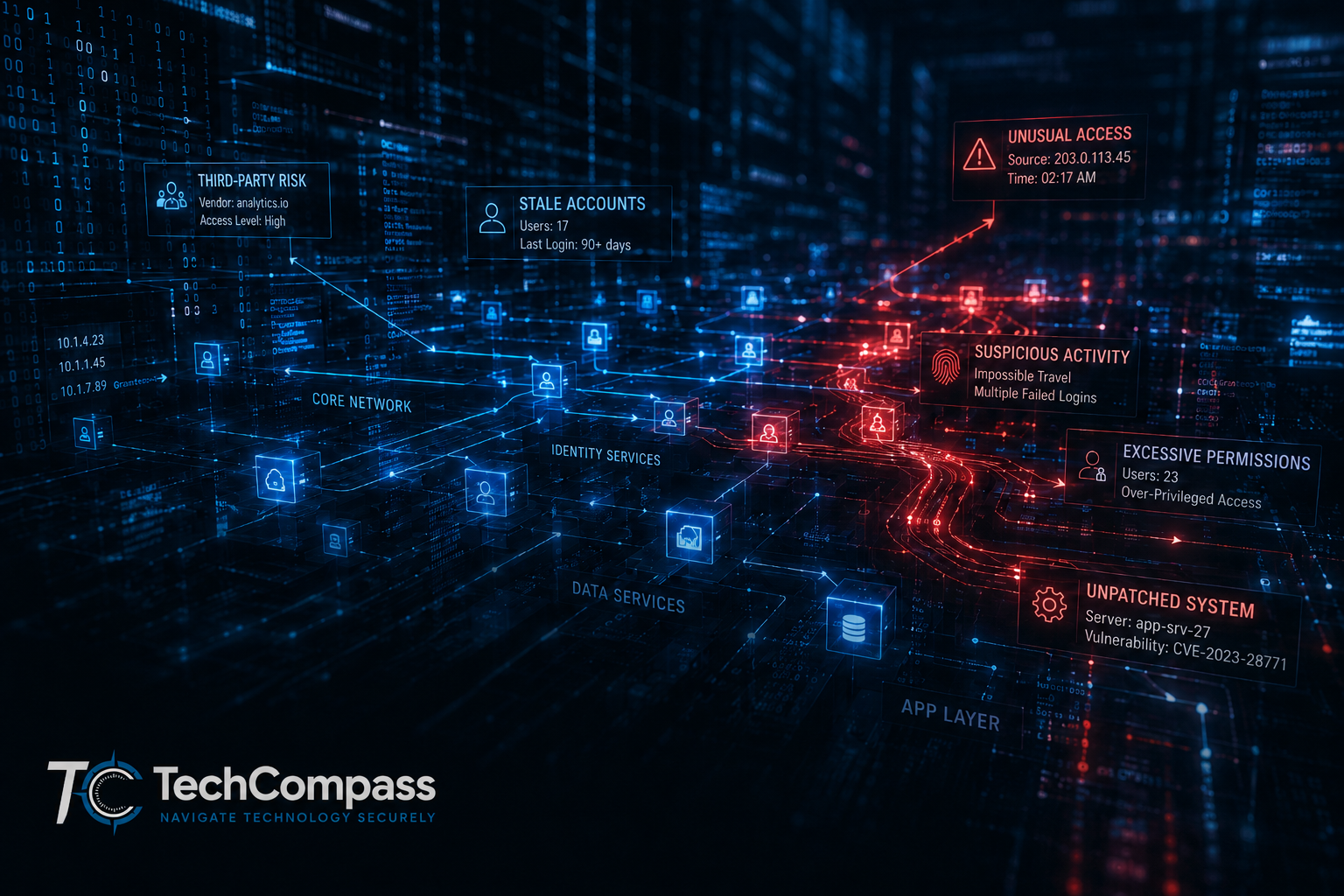
Every organization worries about a breach. Almost none understand what one actually looks like until they live through it. This is the first post in a series on what actually happens before, during, and after a breach. This one is about what comes before: the conditions that were already there, long before anyone knew there was a problem.Every organization worries about a breach. Almost none understand what one actually looks like until they live through it.
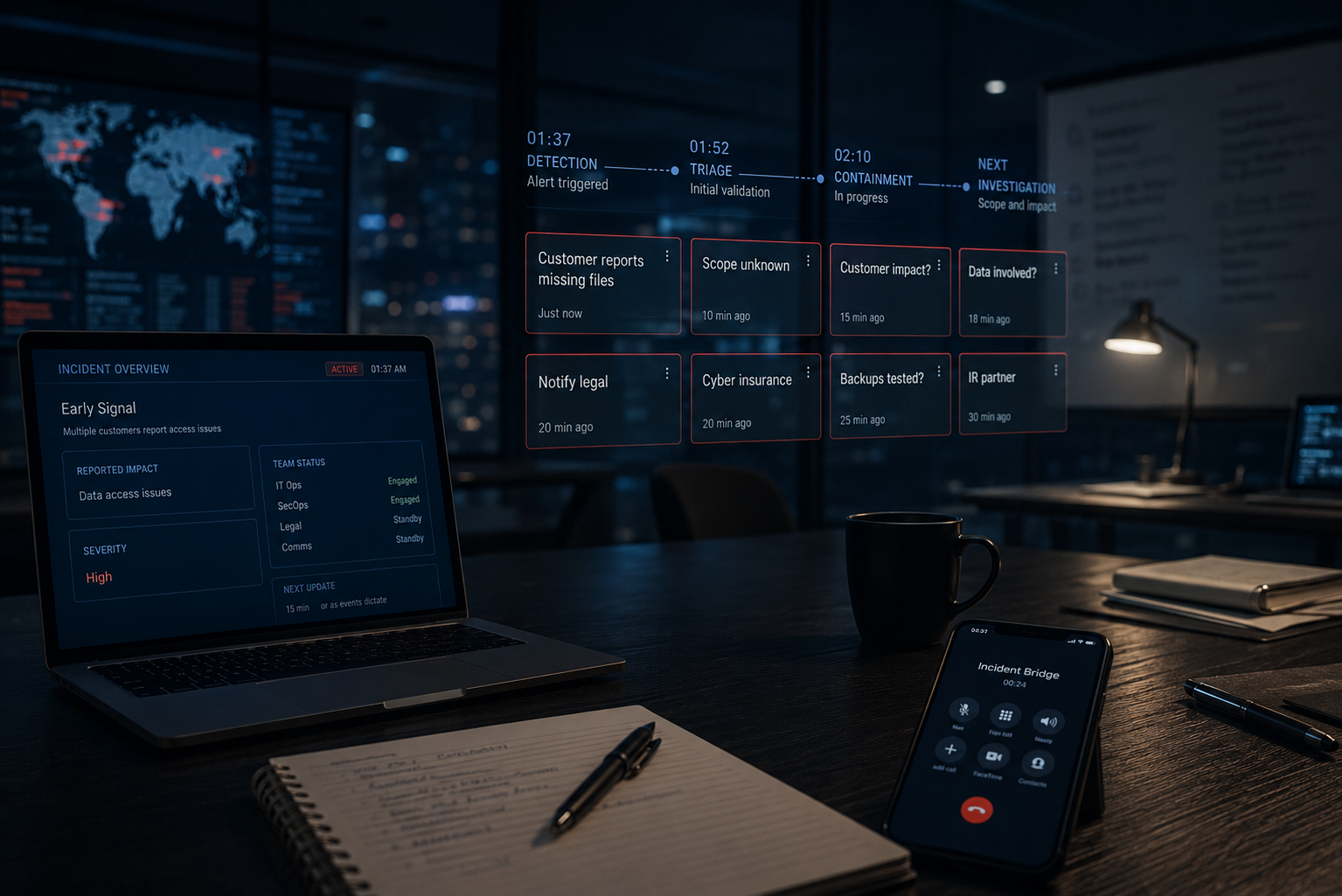
A few years ago, I was pulled into an incident that started with a single customer call. The customer had logged into the platform that morning and noticed files were missing. At first, everyone assumed it was a support issue. Then a second customer reported something similar. Then a third. Within an hour, leadership was pulled into the conversation. At that point, nobody knew whether the issue was operational, accidental, or security related. The investigation was just getting started.
The breach is over.The systems are back online. Business is operating again. The incident response team has wrapped up. The cyber insurance claim is underway. Everyone wants to move on.That's exactly when I tell clients to slow down.After being involved in enough incident response engagements, I've learned that the recovery phase is where organizations either become significantly stronger or quietly set themselves up for the next incident.The attack is over, but the work isn't.
What topic do you want to hear about? Let us know.
Is your organization prepared to handle cyber threats? From ransomware readiness assessments to virtual CISO leadership, TechCompass offers comprehensive solutions to secure your digital assets.
.webp)